
Why Sleep Will Change the Way You Run Your Business
If you’ve ever treated a late-night email session as proof of commitment, you’re not alone. Entrepreneurs are often praised for pushing through, and sleep can start to feel like a luxury you’ll claim after the next launch, client deadline, or cash-flow milestone.
But sleep isn’t time stolen from your business. It’s performance infrastructure: the foundation that supports the thinking, communication, and steady leadership your business depends on.
That doesn’t mean one imperfect night guarantees a bad decision or a failed negotiation. Sleep research is nuanced, and entrepreneur-specific studies are still developing. But the evidence increasingly connects sleep with the cognitive and emotional resources you draw on to run a business. A 2026 review of 31 studies on entrepreneurs and sleep describes links to performance, recovery, decision-making, and emotional regulation.
[Read the scoping review](https://link.springer.com/article/10.1007/s11187-026-01220-9).
Here’s how to make sleep a practical part of your operating system, not another wellness task on an already crowded to-do list.
Clarity and community: see sleep as a business input
Think about the work that depends on you: reviewing a contract, reading a customer’s feedback, deciding what to prioritize, or guiding a team through a stressful week. These tasks rely on attention, judgment, and patience. When you’re short on rest, it can be harder to bring those resources to the table consistently.
In three studies, including an experiment, researchers found that a good night’s sleep supported entrepreneurs’ ability to imagine promising venture ideas and form initial beliefs about them. Sleep restriction could lead to less optimal performance on those tasks. That’s a reason to be cautious about making big calls after a run of short nights, not a reason to assume every tired founder will choose badly. [Explore the study](https://ideas.repec.org/a/eee/jbvent/v34y2019i6s0883902618303434.html).
Sleep also matters beyond solo work. A more rested you may find it easier to pause before responding to a tense message, listen carefully in a client conversation, or keep a disagreement from taking over the day. One study of entrepreneurs found that more sleep was associated with a weaker link between emotional conflict and work stress. These are associations, not guarantees, but they’re a useful reminder that recovery can support how you show up with other people.
Try this today: Before your next consequential decision, ask, “Am I evaluating this clearly, or trying to get it off my plate because I’m exhausted?” If you’re running on very little sleep, use a checklist, ask a trusted colleague to review the details, or delay an irreversible decision when you reasonably can.
Authority and action: build a sleep system that works on busy weeks
You don’t need a perfect bedtime routine. Start with a few repeatable signals that tell your workday, and your brain, that the day is winding down.
1. Set a consistent sleep window. Choose a bedtime and wake time you can usually maintain, including on weekends. Work backward from the wake time and allow enough opportunity for sleep. A steady schedule is a more useful starting point than chasing a perfect number every night.
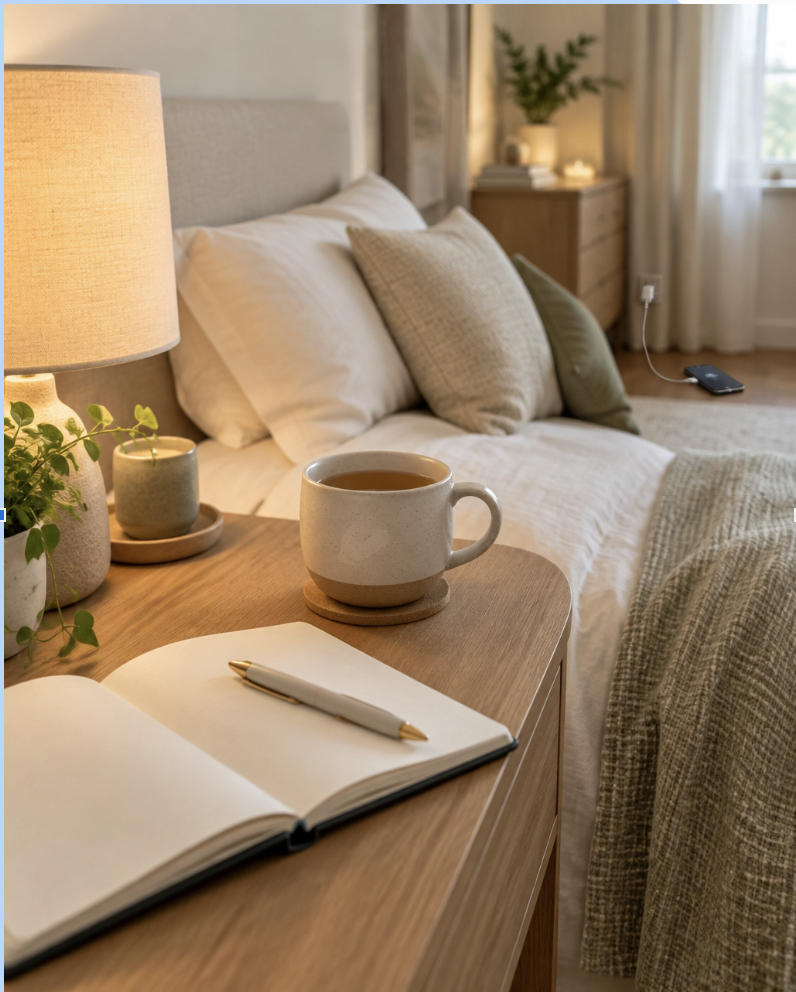
2. Create a short wind-down routine. Give yourself 20–30 minutes to transition out of work mode. Close open tasks, write down tomorrow’s first priority, and choose a quiet activity such as reading or gentle stretching. You’re not trying to solve your whole business before bed; you’re giving your mind a place to park unfinished work.
3. Pick a caffeine cutoff. Experiment with stopping caffeine around eight hours before your planned bedtime, then notice how you feel. If that’s a big shift, move the cutoff earlier gradually. People vary in how caffeine affects them, so treat this as a practical test, not a rule you’ve failed if your schedule differs.
4. Manage light and screens. Get natural light in the morning when you can. In the evening, dim bright lights and reduce stimulating screen use as bedtime approaches. Put your phone on a charger away from the bed, and decide in advance how urgent messages will reach you.
5. Review the pattern, not one night. For a week, jot down bedtime, wake time, caffeine timing, and how alert you felt the next day. Keep it simple: a few notes can reveal whether late calls, scrolling, or a changing schedule repeatedly disrupt your rest.
Mindset: let go of the sleep-deprivation badge
When you’re building a business, working late can be necessary sometimes. The problem is when temporary exceptions become your default operating model, and exhaustion becomes a status symbol.
A sustainable founder doesn’t need to prove commitment by running on empty. Protecting sleep is a form of planning: you’re making room for the judgment and emotional steadiness that tomorrow’s work may require.
That’s especially relevant before launches. Plan the busy period as carefully as you plan the marketing:
- Set a reasonable latest work stop for most nights.
- Decide which launch tasks can be delegated, automated, or delayed.
- Avoid scheduling major decisions immediately after an all-nighter if you can.
- Build a recovery night into the calendar after a demanding push.
Negotiations deserve nuance, too. A 2025 series of studies found no evidence that sleep deprivation reduced the joint economic quality of integrative negotiation agreements. That doesn’t mean sleep never matters in a negotiation; it means you shouldn’t claim that tired people inevitably make worse deals. You can still prepare well-rested where possible, bring clear notes, and take breaks when a discussion becomes emotionally charged. [Read the negotiation research](https://online.ucpress.edu/collabra/article/11/1/128507/205876/Sleep-Deprivation-and-Negotiation).
If sleep feels difficult, don’t turn that into another reason to criticize yourself. You can adjust your routine, test small changes, and seek qualified health support if ongoing sleep problems are affecting your life.
Energy: protect sleep during launches and travel
The routines that work in a quiet week can be harder to maintain during a product launch or a trip. Rather than aiming for perfection, decide which parts of your sleep system you can keep.
During a launch:
- Preserve your usual wake time where possible, even if your day is unusually busy.
- Set a clear “stop work” cue, such as sending the final team update and writing tomorrow’s first task.
- Keep caffeine earlier in the day rather than using it to extend late-night work.
- If an urgent issue keeps you up, simplify the following day’s schedule and use extra checks for detail-heavy work.
During travel:
- Keep familiar wind-down cues, like reading for a few minutes or making a brief plan for the morning.
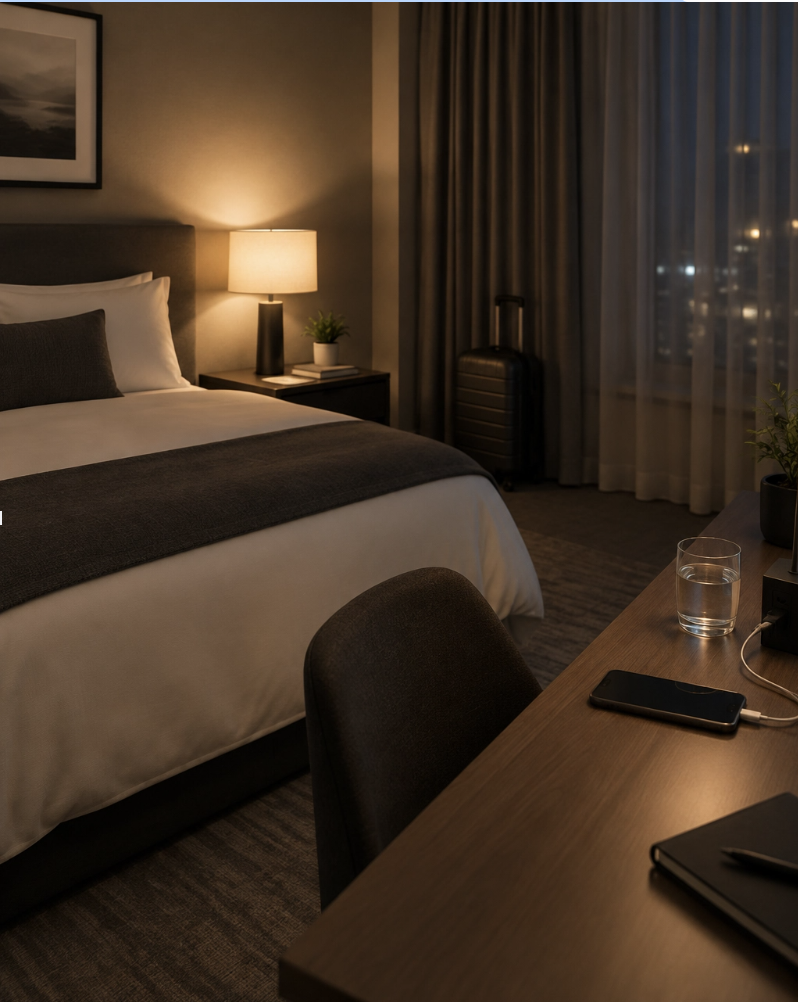
- Set up your room to feel calm: draw the curtains, dim the lights, and charge your phone away from the bed.
- When time zones shift, allow room for your routine to adapt. Focus first on a reasonably consistent wake-up plan and morning light.
There will be nights when the plan doesn’t work. That’s normal. Treat disruptions as information: what happened, what can you adjust, and what’s one manageable next step?
Outcome: check whether your sleep infrastructure needs attention
Use this quick self-assessment. Think about the past two weeks and mark each statement yes or not yet:
- I keep a reasonably consistent sleep and wake schedule.
- I have a simple routine that helps me transition out of work.
- I have a caffeine cutoff that usually leaves time before bed.
- My phone and work notifications don’t pull me into bedtime email checks.
- I protect sleep during launches and make a plan for travel.
- I can name at least one way tiredness affects my focus, mood, or decisions.
If you marked several “not yet” answers, don’t overhaul your entire life tonight. Choose one practical change and test it for seven days. You could set a phone-charging spot across the room or block a consistent wind-down time on your calendar.
For a structured next step, join Healthy Entrepreneur Club’s FREE 21-Day Sleep Challenge and give yourself three weeks to build steadier habits. [Get started here, join the waitlist](https://www.healthyentrepreneur.club/join-the-club).
You can also explore the [7-Day Entrepreneur Sleep Audit](https://www.healthyentrepreneur.club/resources) to track sleep, energy, and daily performance.
If you’d benefit from help adapting your routines to your workload, [learn about Club membership](https://www.healthyentrepreneur.club/membership), including coaching and community support.
Sleep won’t remove every hard decision or busy season. But when you protect it consistently, you give yourself a steadier foundation for the work ahead. Your business runs on more than your calendar. Give the person running it a chance to recover.
